Case study 06 / Riot Games / Live broadcast
VALORANT Masters AR
At Masters Berlin, eight tracked cameras supported augmented reality graphics within a live tournament broadcast.
Case study focus
This case looks at where stage design, camera tracking and live broadcast meet.
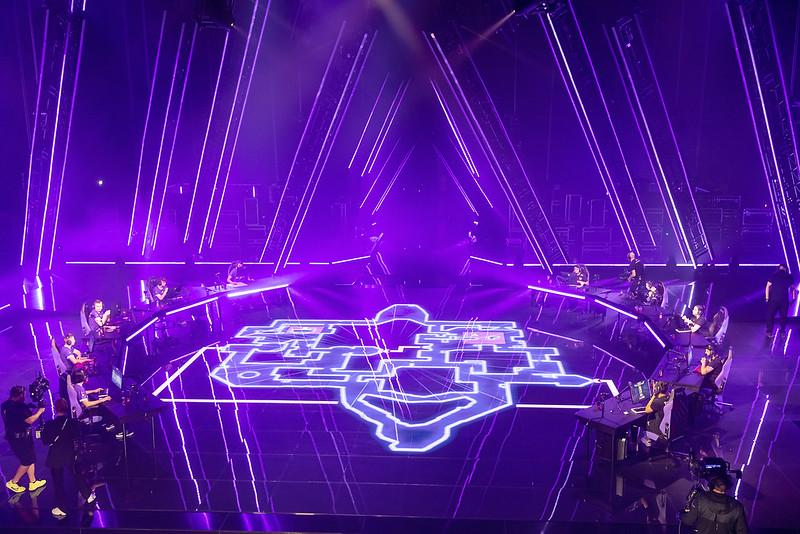
AR alongside a physical stage
The broadcast combined stage and screen content with graphics drawn from the game. The AR elements had to stay in place as the live camera angle changed.
Eight tracked cameras
For Masters Berlin, bright! studios describes working with Stage Precision across five Stype-tracked cameras and three Sony PTZ cameras using FreeD. The team calibrated the PTZ lenses and aligned their positions to the stage.
One live production
The work put camera tracking and AR control inside a live tournament workflow. The stage photography shows the physical venue, while the production case study explains the tracking behind the broadcast layer.
RE/VERSE perspective
How we’d review a similar brief
- Decision
- Agree early on which camera angles must carry AR.
- What to examine
- The stage plan, tracked camera positions and how a graphic holds its position through a cut.
- Review test
- Does the same graphic read as part of the stage when the director switches cameras?
Project sources
Project teams & documentation
The sources below document the project and the teams involved.